


Bachelor of Science in Accountancy
PROGRAM SUMMARY
Year Started: 2005
Government Recognitio Number: GR: HER-035 S.2006
VISION
The College of Business, Entrepreneurship and Accountancy envision itself to become a center of excellence in accountancy, business management and entrepreneurship education. It is committed to the delivery of relevant and effective accountancy and business education programs aligned with the demands of the dynamically changing local and international business environment to produce professionally competent graduates aware of their rights, duties and responsibilities as Christ-centered stewards of the society.
MISSION
The College of Business, Entrepreneurship and Accountancy recognizes the synergistic effect of every individual and every business process undertaken in the different academic and support units in our concerted effort to deliver quality education to our students. To effectively form and train our students towards professional competence, it must also be imbibed by the College of Business, Entrepreneurship and Accountancy faculty and staff, as well as, all operational units in the college is working in close coordination with.
The LCUP College of Business, Entrepreneurship and Accountancy shall offer the different learners high quality education and services that are:
1. Relevant and responsive to the needs of the dynamic business communities local and international;
2. Affordable to all deserving learners, regardless of gender, origin, race, creed;
3. Innovative in program planning, instruction and research;
4. Complementary in partnership with industries, institutions and other business stakeholders; and
5. Catholic in character and imbued with Augustinian spirituality.
GOALS
1. Provide business education that is Catholic and Augustinian in character according to local and international standards of quality and excellence responsive to the global challenges in the business environment.
2. Promote the development of critical thinking among students in the analysis of business, management, entrepreneurship and accountancy concerns.
3. Train students to become agents of change in business organizations through research, knowledge development and technology transfer.
4. Assist uplifting the economic well-being of adopted marginalized communities through the creation of short-term programs, activities and livelihood opportunities.
5. Link with professional and socio-civic organizations to serve as partners in co and extra-curricular endeavors for the learning enhancement of our accountancy and business students.
Bachelor of Science in Accountancy (BSA)
This program provides a comprehensive education in accounting, designed to equip students with the essential knowledge and practical skills needed for a successful career in Accountancy, with a particular emphasis on Public Accounting. Through a robust curriculum, graduates gain a deep understanding of accounting principles, financial management, and regulatory frameworks. Upon completion, students are well-prepared to pursue professional certifications, including those administered by the Professional Regulatory Commission - Board of Accountancy (PRC-BOA) and various prestigious global accounting organizations. This program not only offers the foundational education required for the Accountancy profession but also positions graduates for success in meeting international standards and achieving certification, unlocking opportunities in both local and global accounting markets.
As a field of study, Accountancy is a dynamic profession that encompasses a broad range of services critical to the financial health and decision-making of organizations. Accountants provide assurance and audit services for statutory financial reporting, ensuring transparency and compliance with regulatory standards. They also offer tax-related services, management advisory support, and contribute to strategic decision-making by partnering with organizations in devising plans, setting performance targets, and establishing control systems. Moreover, accountants play a pivotal role in providing expertise in financial reporting and control, helping various stakeholders—such as business leaders, investors, and regulators—make informed, data-driven decisions that drive organizational success and sustainability.
Accountants must embrace lifelong learning and commit to continuous professional development to stay current with evolving regulations, technologies, and industry best practices. They are expected to maintain the highest standards of objectivity and ethics, consistently prioritizing the public interest in all their professional endeavors. In addition, accountants have a crucial role in fostering a culture of fairness and transparency within organizations. They should actively help colleagues identify and overcome biases by grounding decision-making processes and implementation strategies in solid evidence, providing empirically tested, objective solutions whenever possible. This approach ensures that organizational decisions are not only effective but also aligned with ethical principles and long-term sustainability.
Accountancy professionals must always prioritize the interests of an organization’s customers while recognizing the broad spectrum of relationships that are vital for a business’s successful operation. They are responsible for understanding and respecting the interconnectedness of these relationships, as they directly impact business strategy and sustainability. Additionally, accountants must possess a comprehensive understanding of the global macroeconomic environment, enabling them to assess and interpret information in a way that is both relevant and valuable to their organization’s goals. This global awareness allows them to make informed decisions, navigate external economic challenges, and support the long-term success of the business.
A combination of accounting and financial expertise, a deep understanding of business dynamics, strong analytical skills, and relevant business experience ensures that accountants are both practical and deeply grounded in operational reality. This comprehensive skill set allows accountants to bridge the gap between financial theory and day-to-day business operations, making them valuable contributors to decision-making processes and helping organizations navigate complex challenges with informed, actionable solutions.
EXPECTED GRADUATE ATTRIBUTES (EGA)
EGA 1: Critical and Creative Thinker
EGA 2: Competent Catholic Augustinian Marian Professional
EGA 3: Socially Responsive Steward
EGA 4: Transformative Lifelong Learner
BSA PROGRAM OUTCOMES (PO)
PO 1: Perform the basic functions of management such as planning, organizing, staffing, directing and controlling. [EGA1, EGA4]
PO 2: Apply the basic concepts that underlie each of the functional areas of business (marketing, finance, human resource management, production and operations management and strategic management)
and employ these concepts in various business situations) [EGA2, EGA4]
PO 3: Express oneself clearly and communicate effectively with stakeholders both in oral and written forms. [EGA1, EGA4]
PO 4: Analyze the business environment for strategic direction [EGA1, EGA4]
PO 5: Prepare operational plan [EGA 3, EGA4]
PO 6:Innovate business ideas based on emerging industry. [EGA3, EGA4]
PO 7:Conduct business research. [EGA1, EGA4]
PO 8:Select the proper decision-making tools to critically, analytically and creatively solve problems and drive results. [EGA1, EGA4]
PO 9:Demonstrate corporate citizenship and social responsibility. [EGA2, EGA3]
PO 10:Exercise high personal moral and ethical standards. [EGA2, EGA3]
PO 11:Demonstrate business and management skills in the workplace with empathy and integrity. [EGA1, EGA2]
PO 12:Work effectively with other stakeholders practicing Marian Augustinian values and manage conflicts in the workplace [EGA2, EGA4]
BSA COURSE LEARNING OUTCOMES (LO)
LO1: - Show understanding of the different concepts, theories and principles in managerial accounting and reporting. [EGA2, EGA3] [P09] [P010] [P011]
LO2: – Reflect student’s understanding and appreciation of the importance of the accounting practices and problems that may be applied to local situations involving managerial function. [EGA1], [P01] [P02]
and employ these concepts in various business situations) [EGA2, EGA4]
LO3: LO3 - Understanding and appreciation of theoretical principles as the basis for proposing basic solution to the preparation of management reports. [EGA1, EGA3], [P02] [P04] [P06]
LO4: Design and Apply the proper accounting practices to achieve goals of a business venture in consideration of the concerns and interests of the different stakeholders. [EGA1, EGA3], [P04] [P08]
LO5: Display the attributes of excellent, professional, Catholic members of business organization. [EGA1, EGA3, EGA4] [P02] [P04] [P06] [P08]
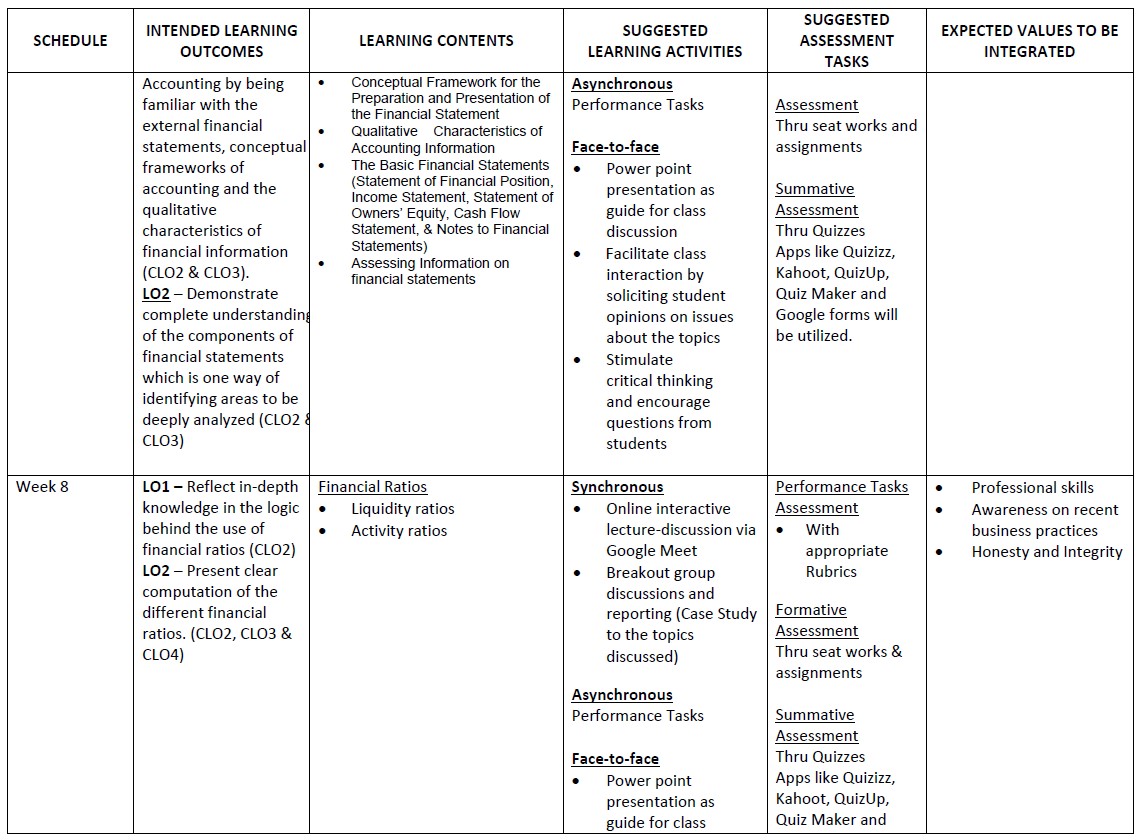
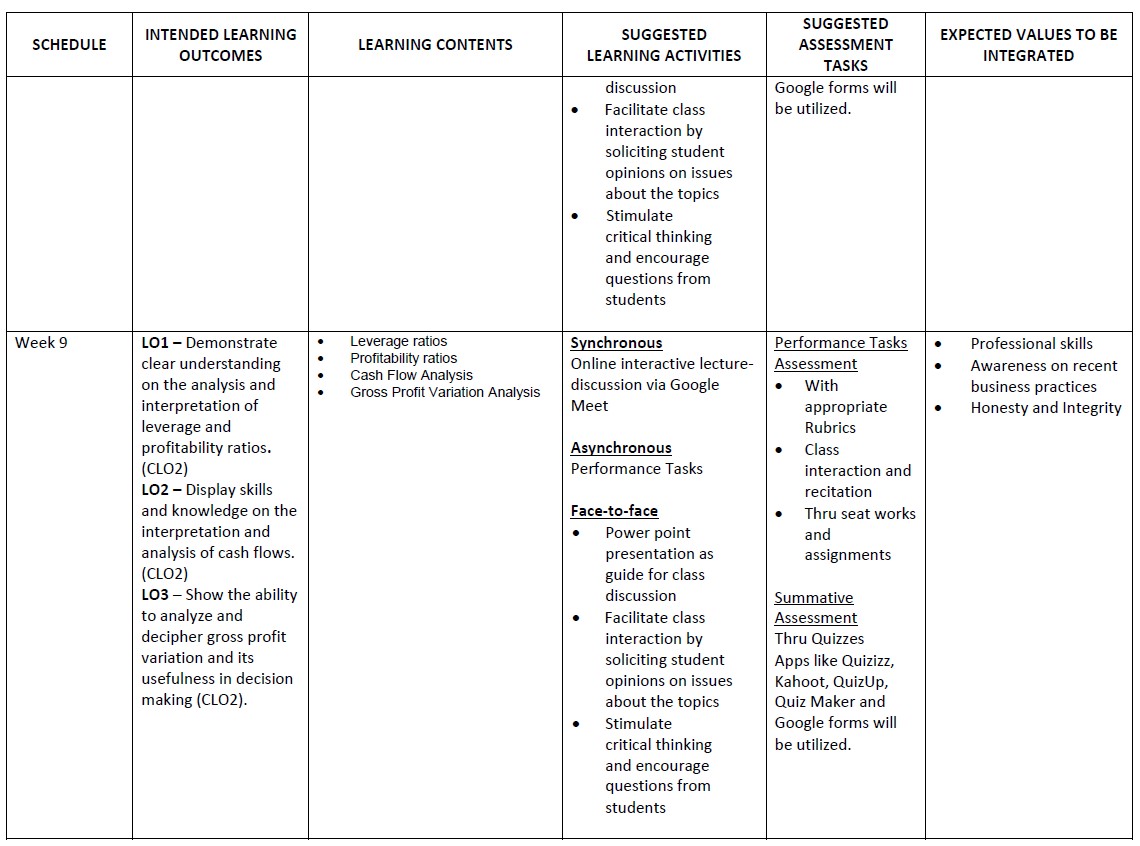
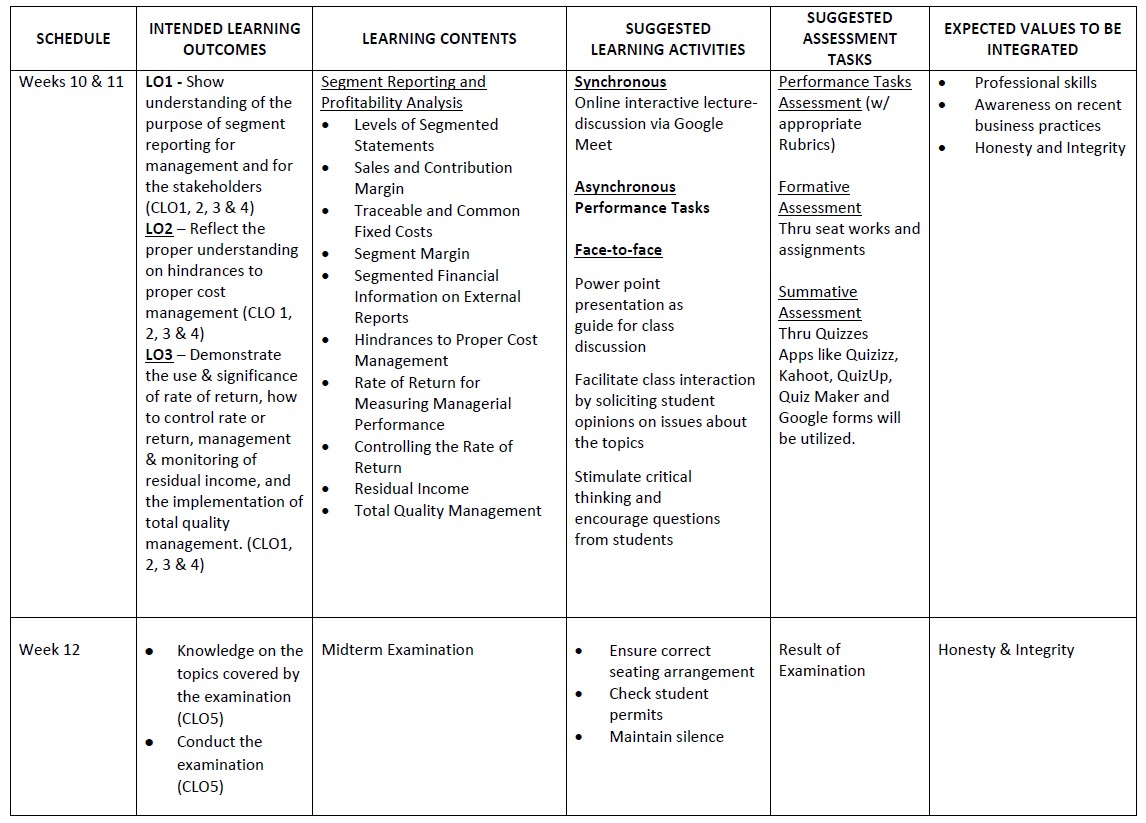
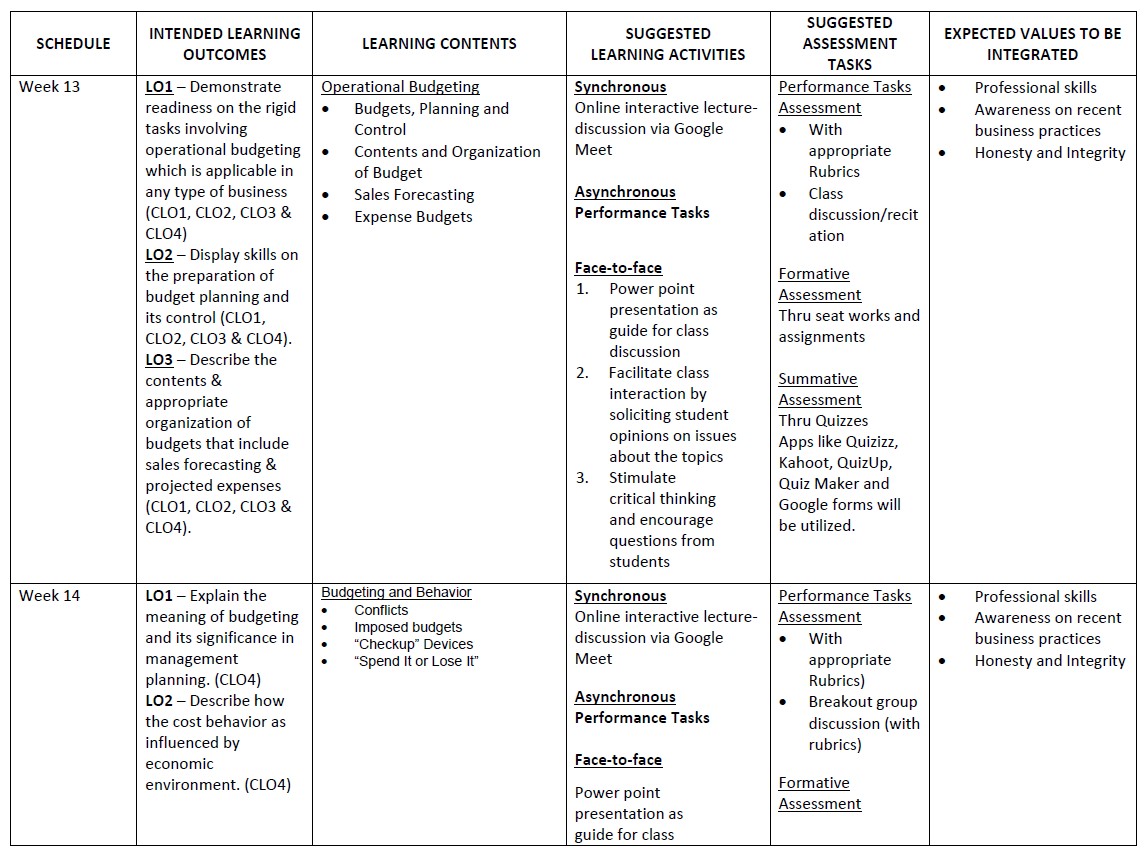
BSA-MBA LEARNING PLAN
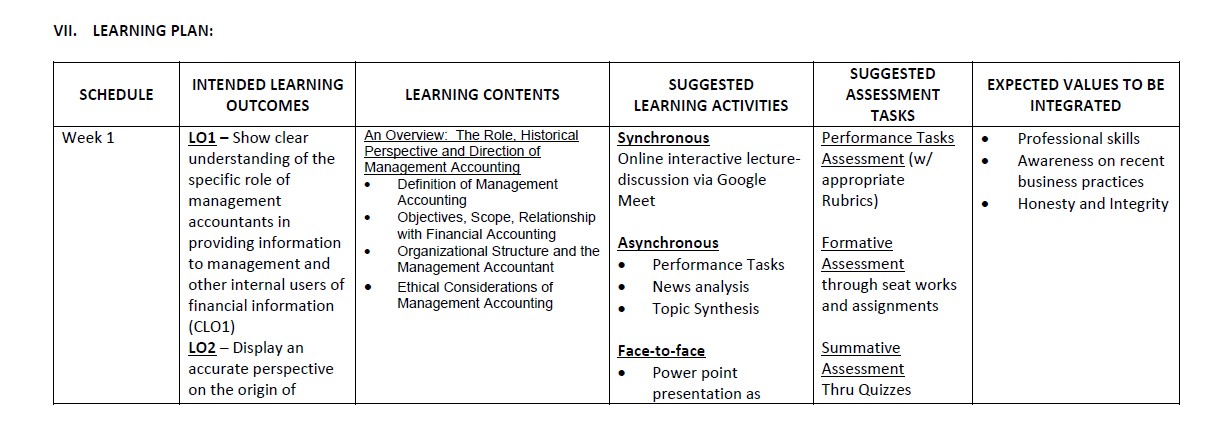
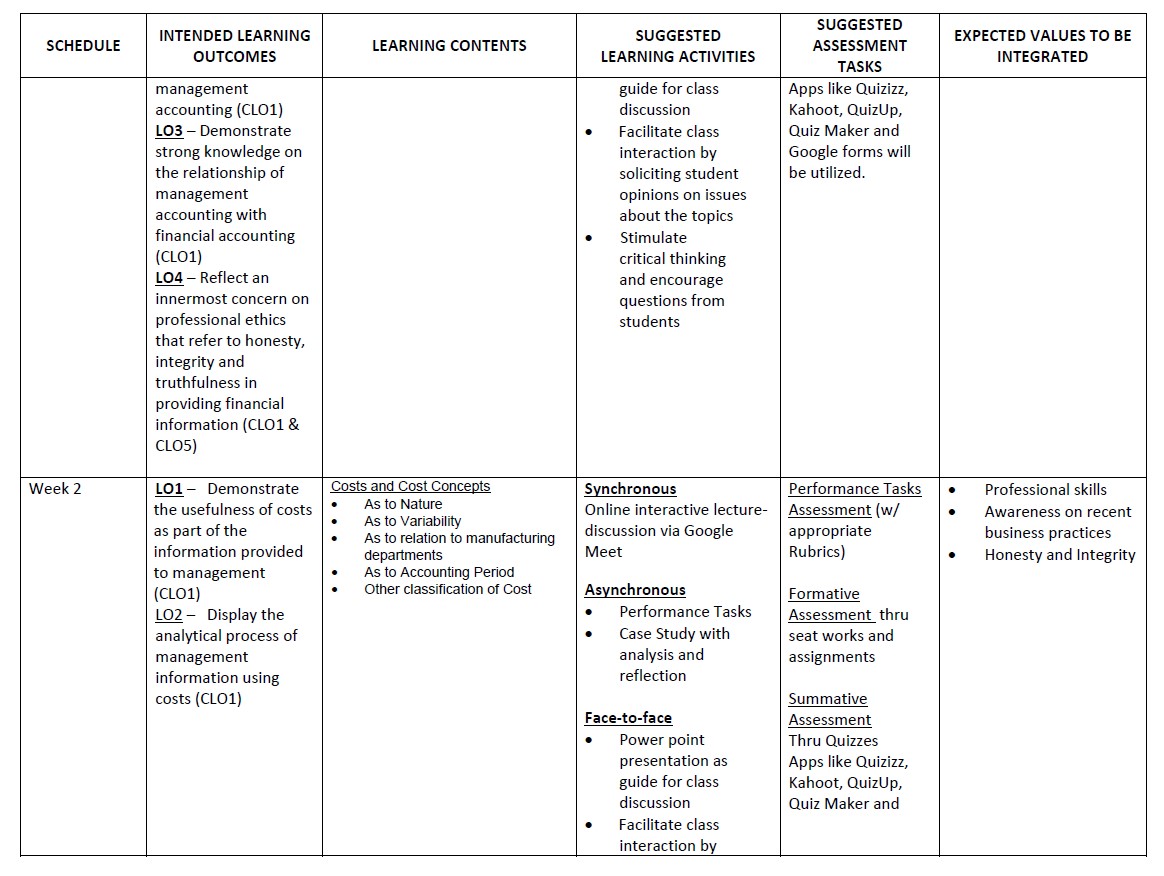
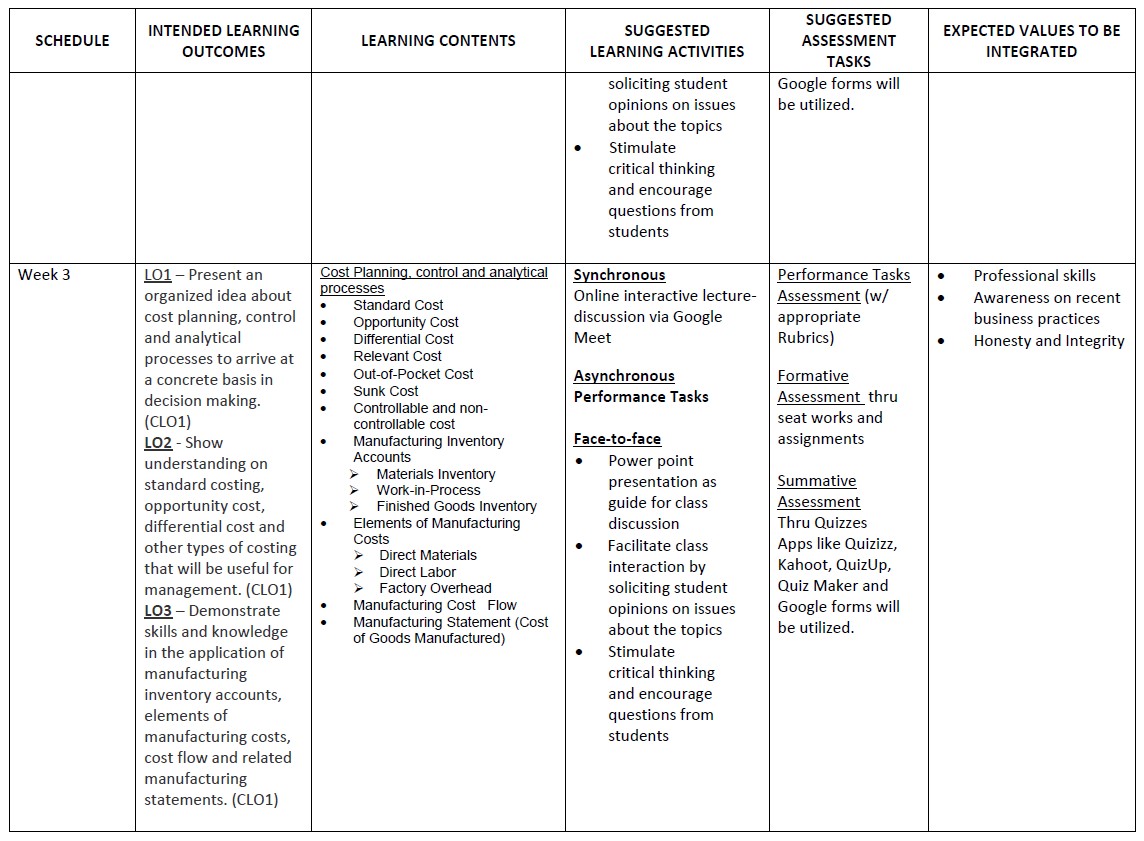
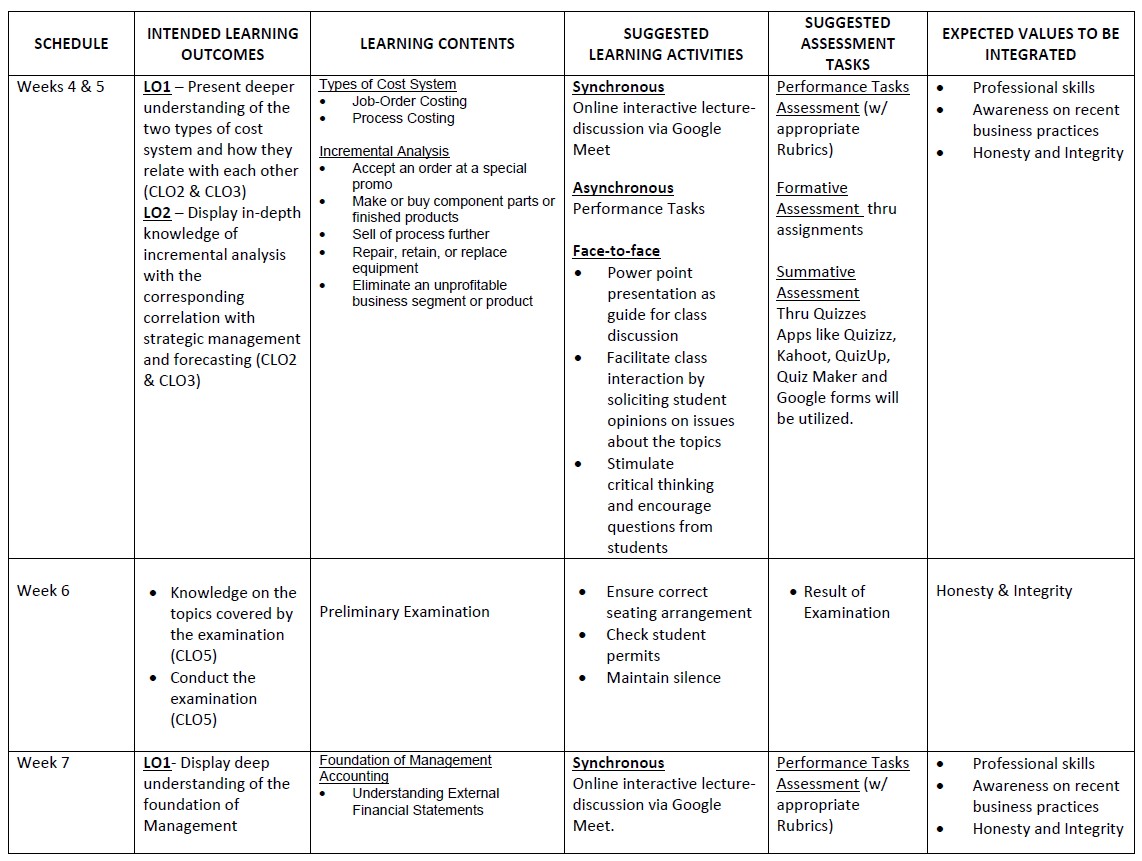
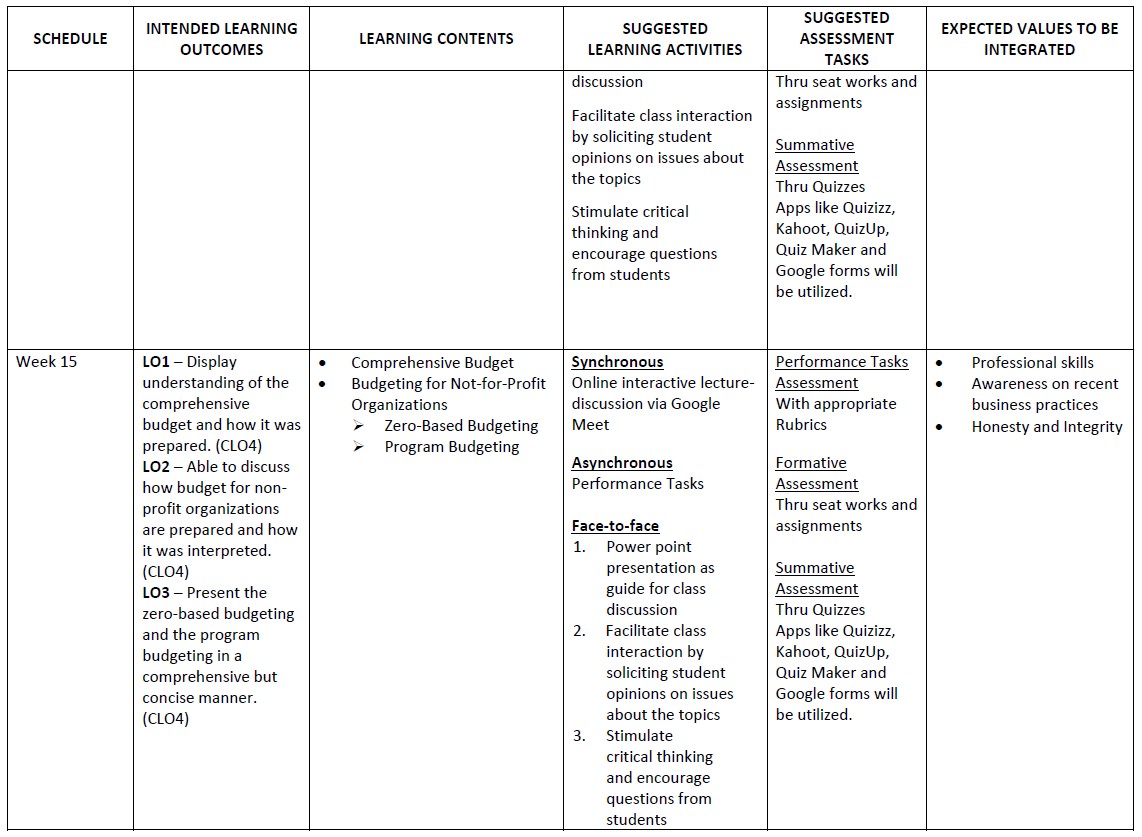
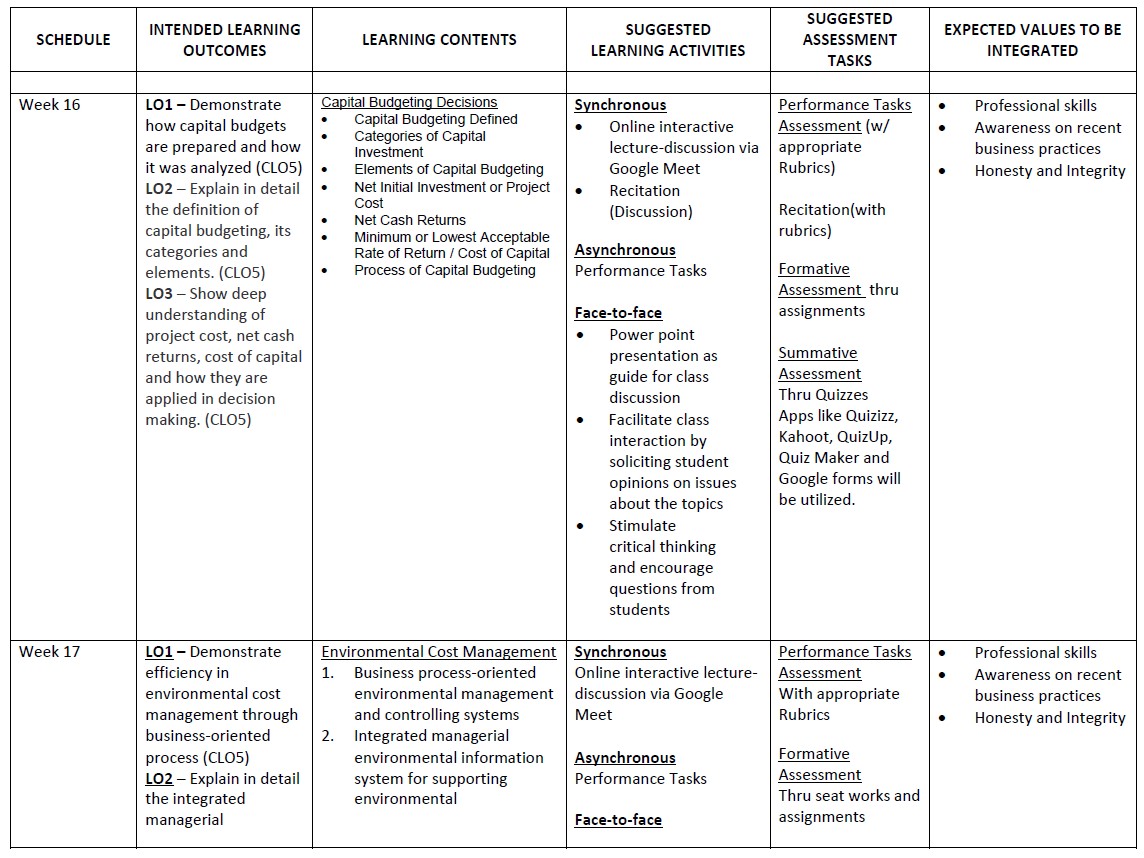
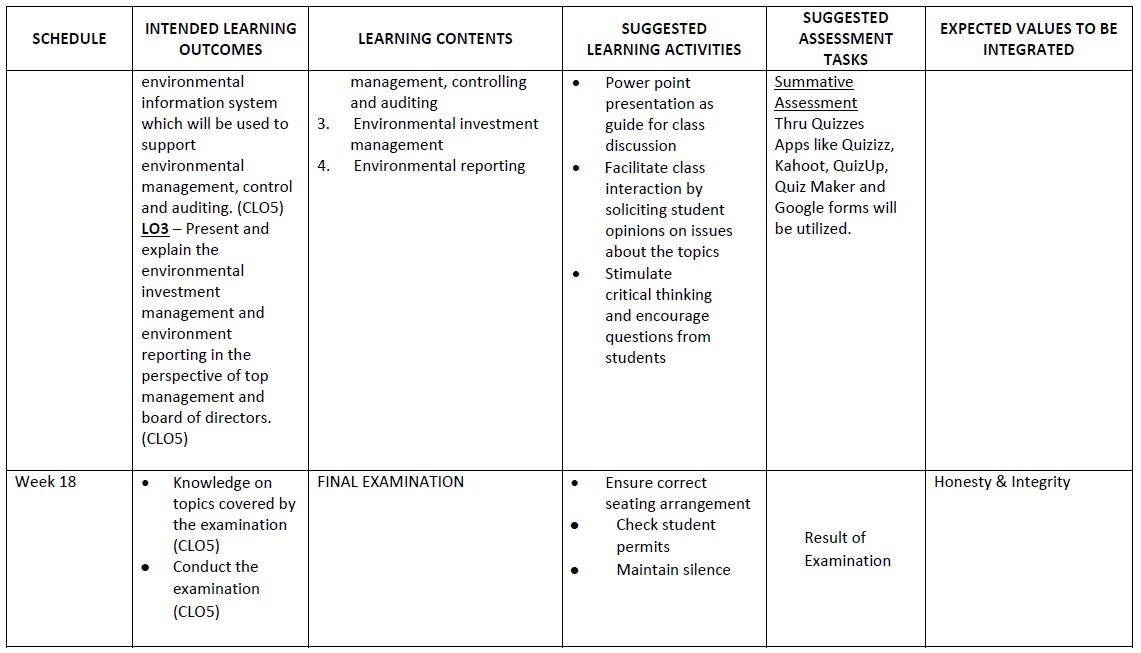
BSA-MBA CONTENTS NOTED
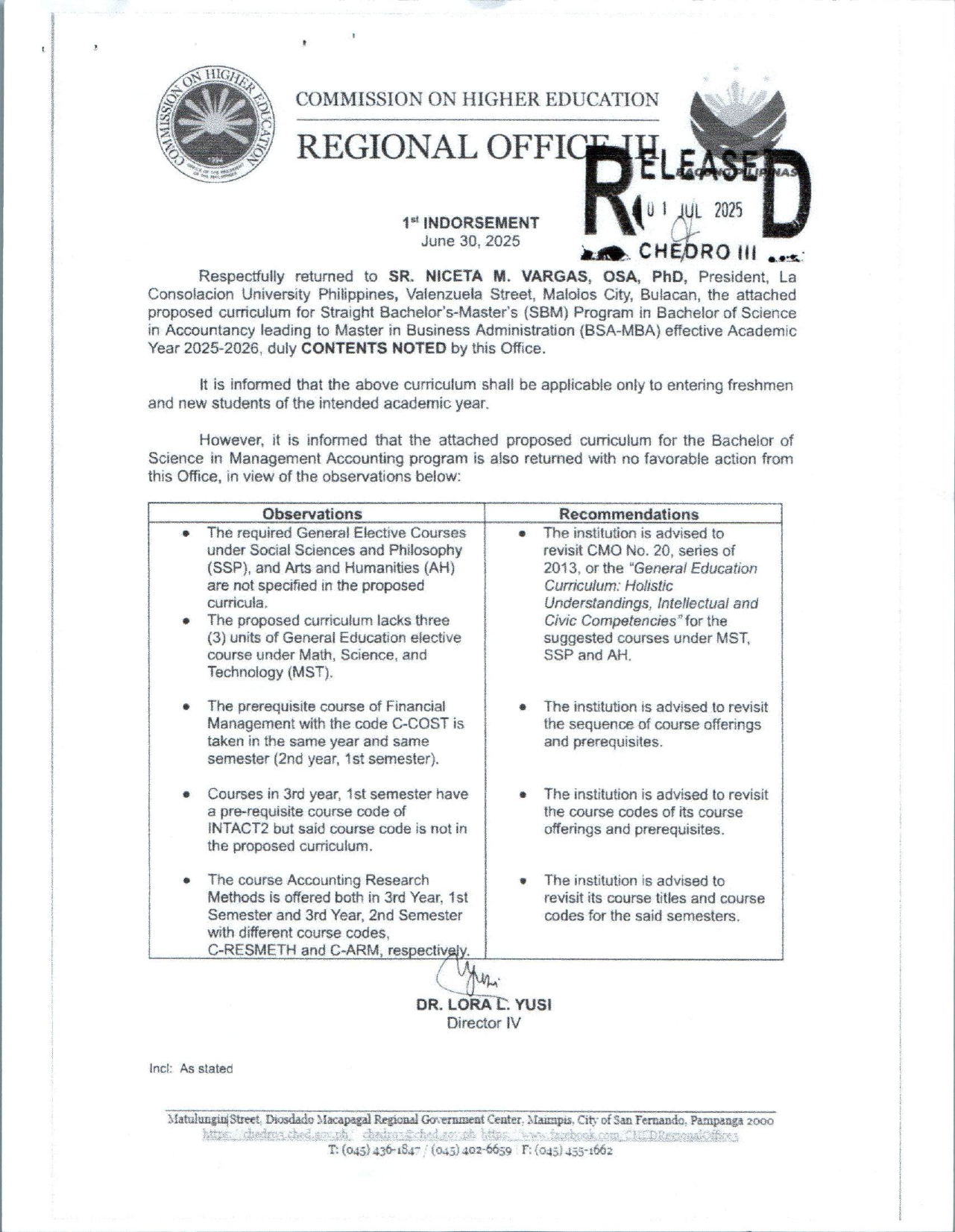
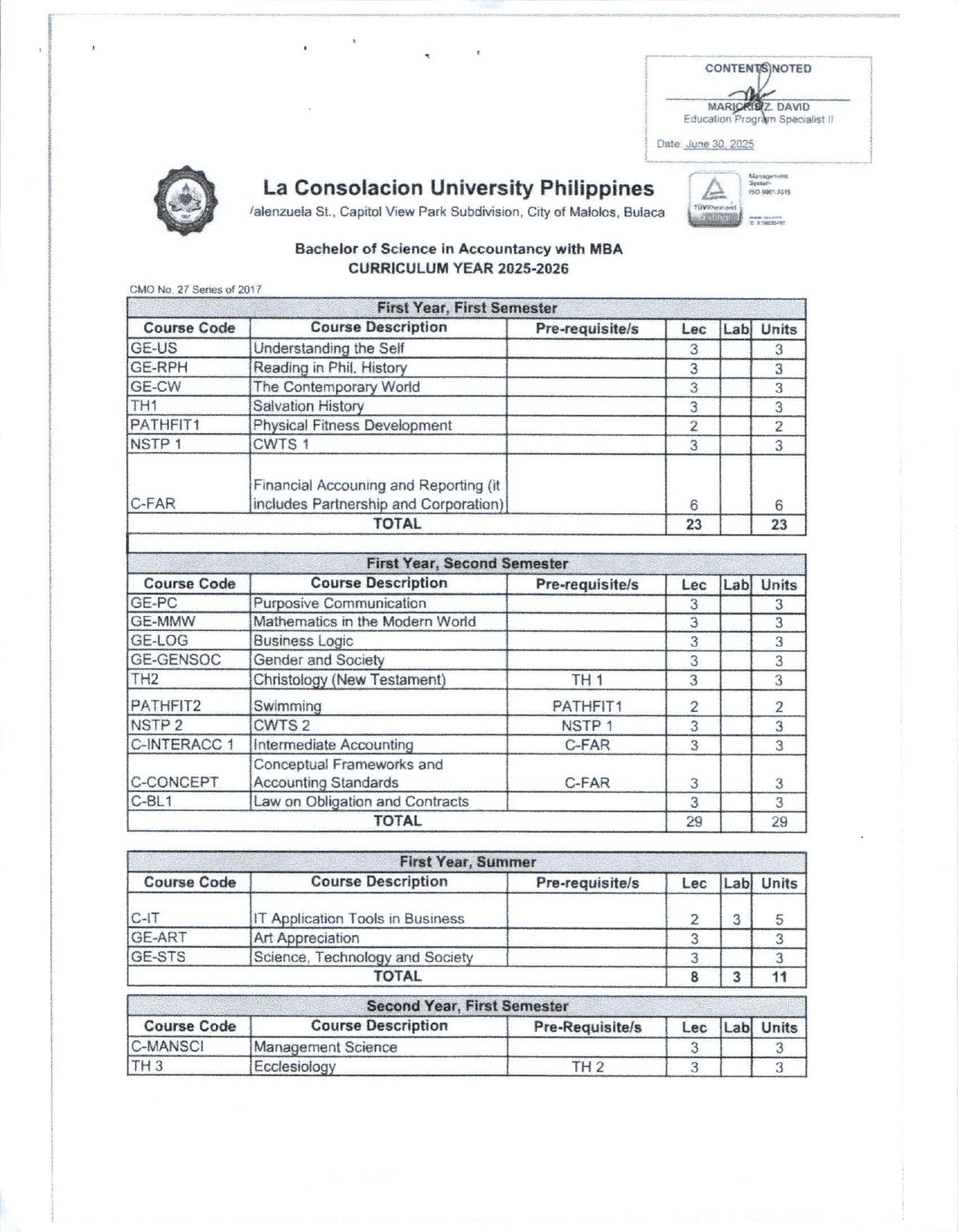
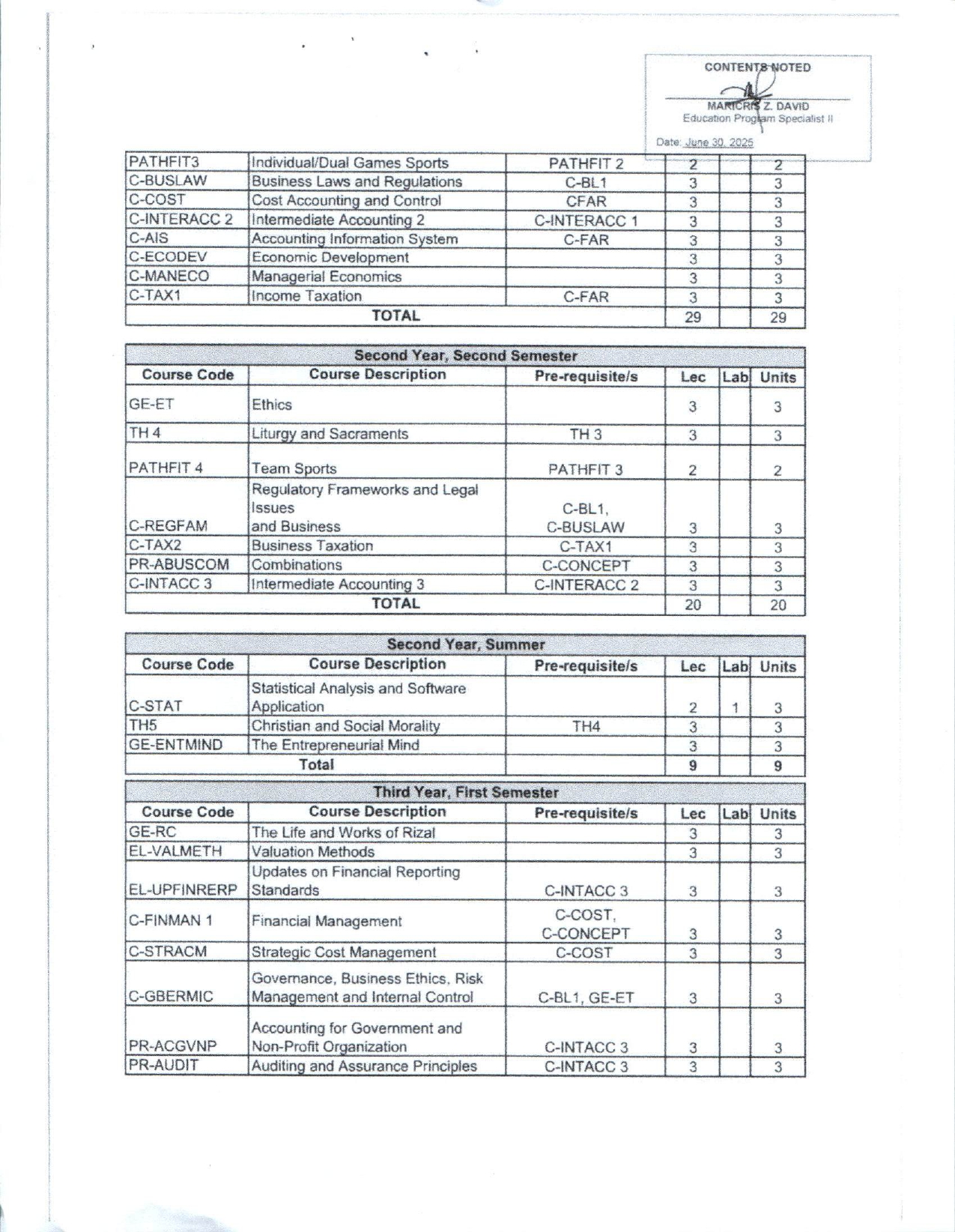
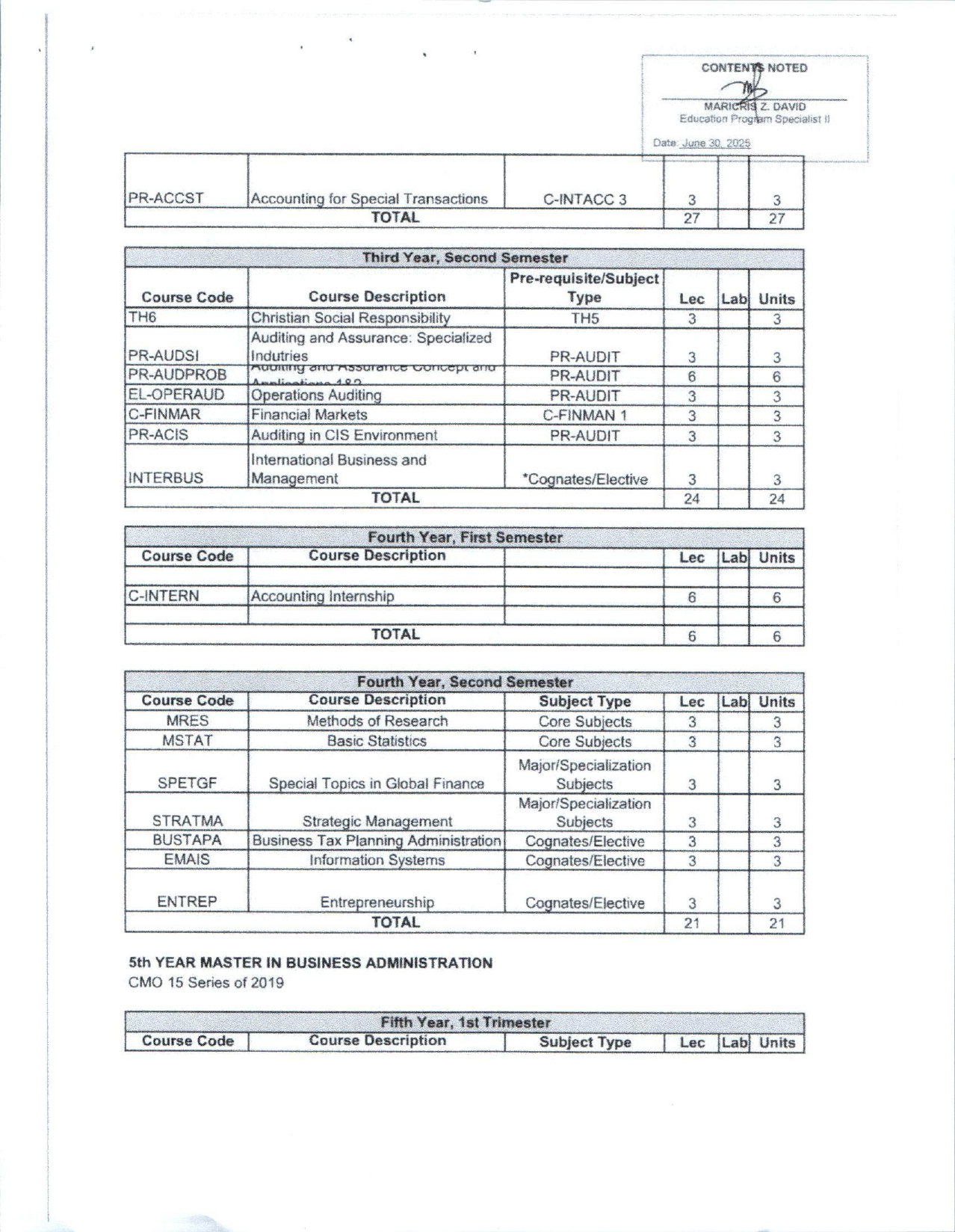
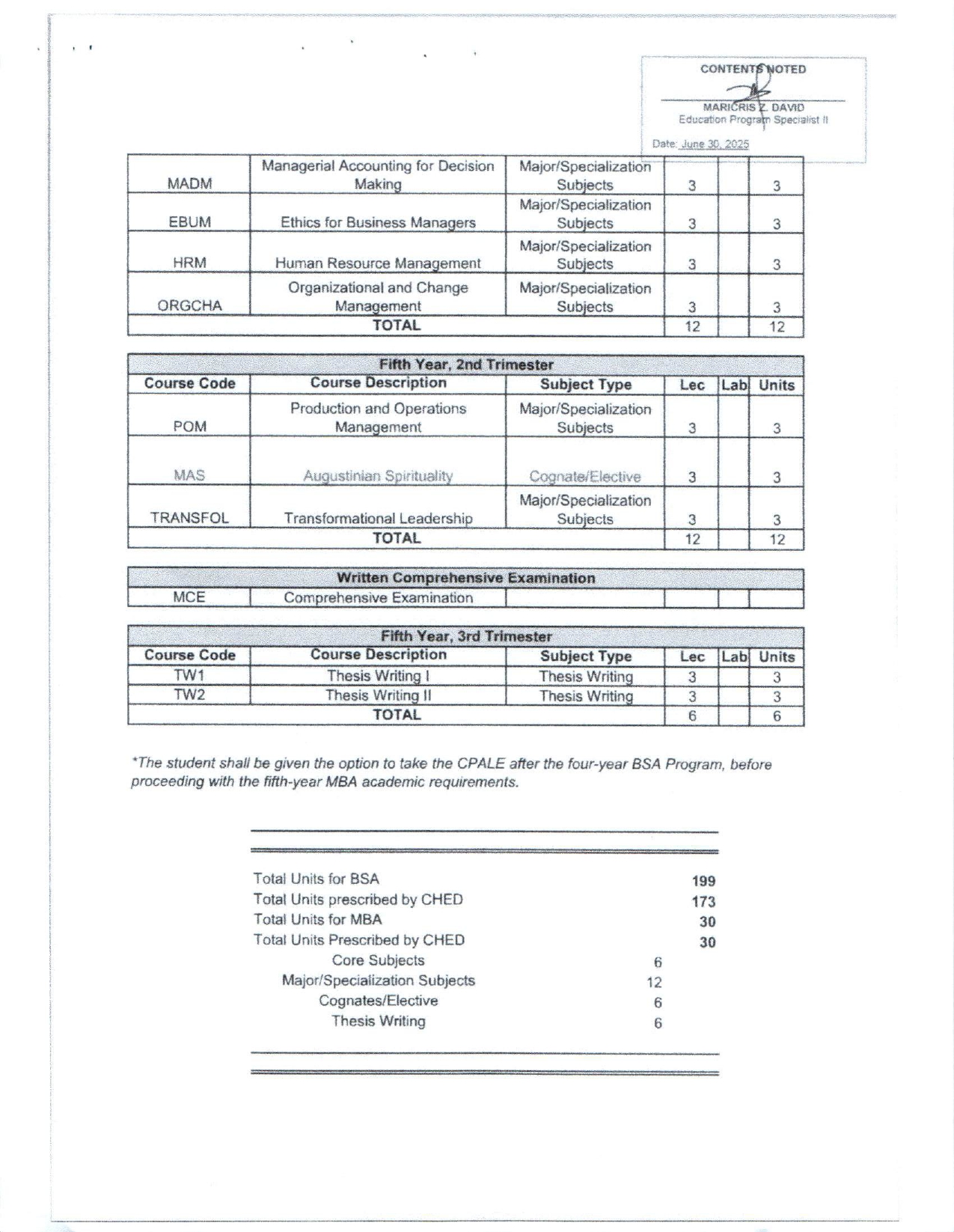
BSMA CONTENTS NOTED

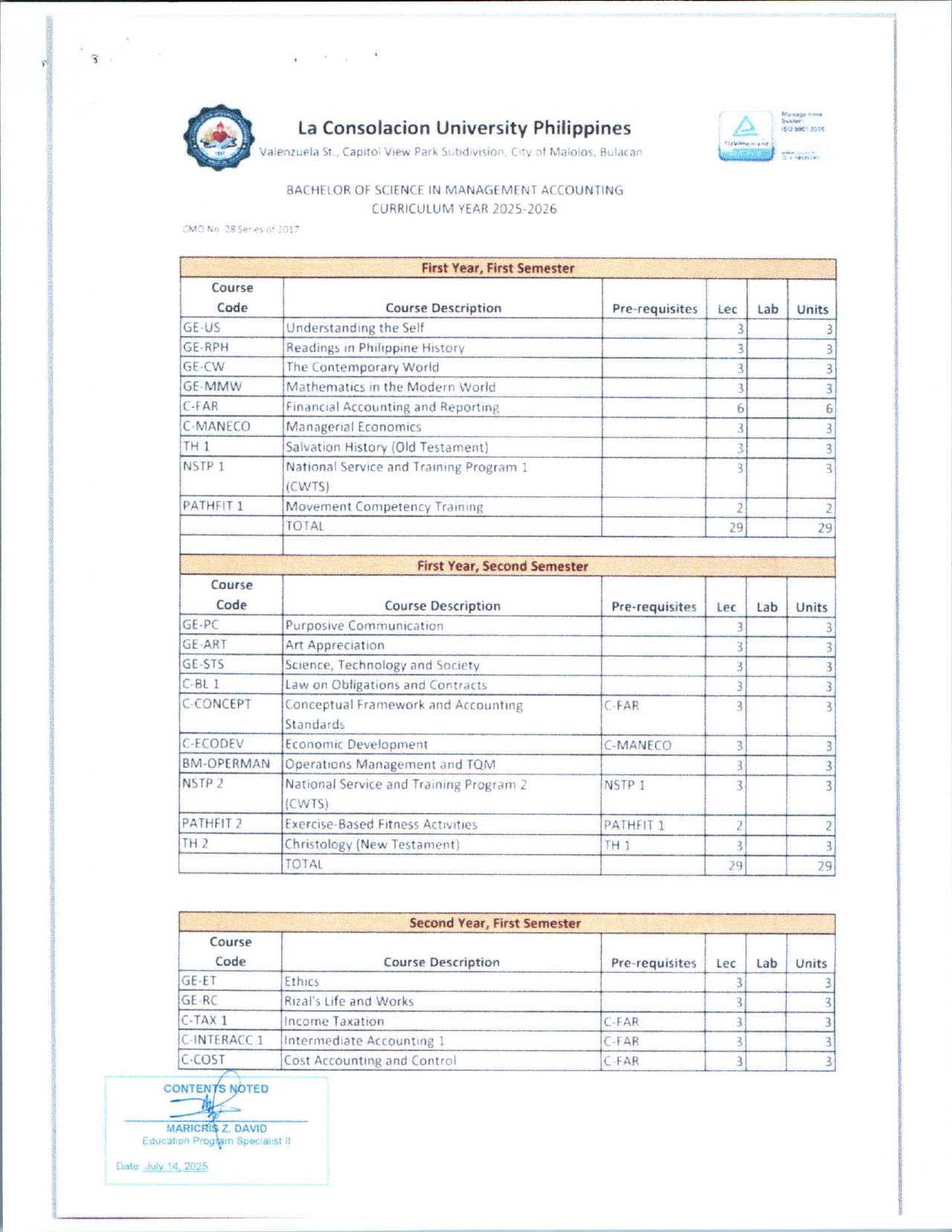
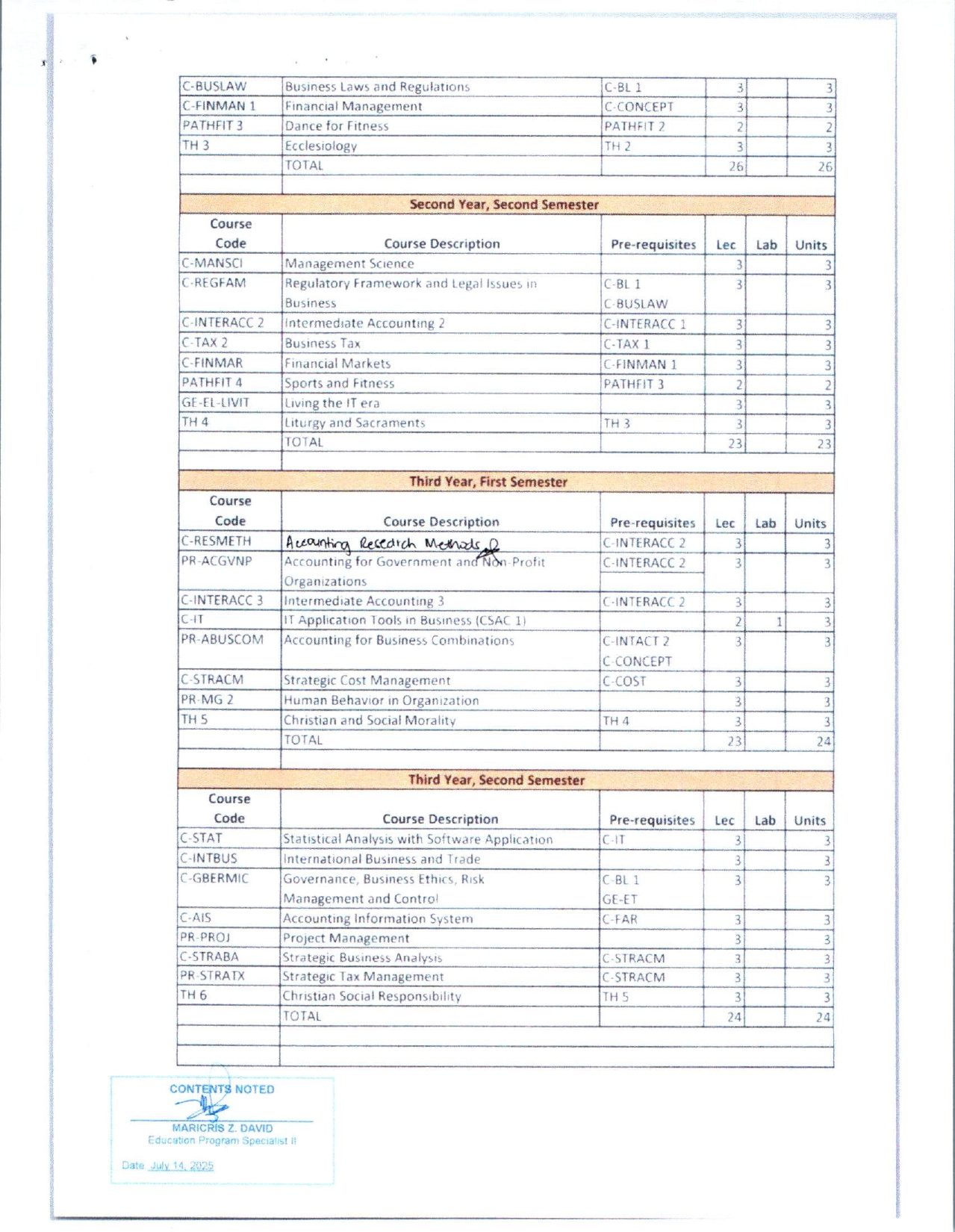
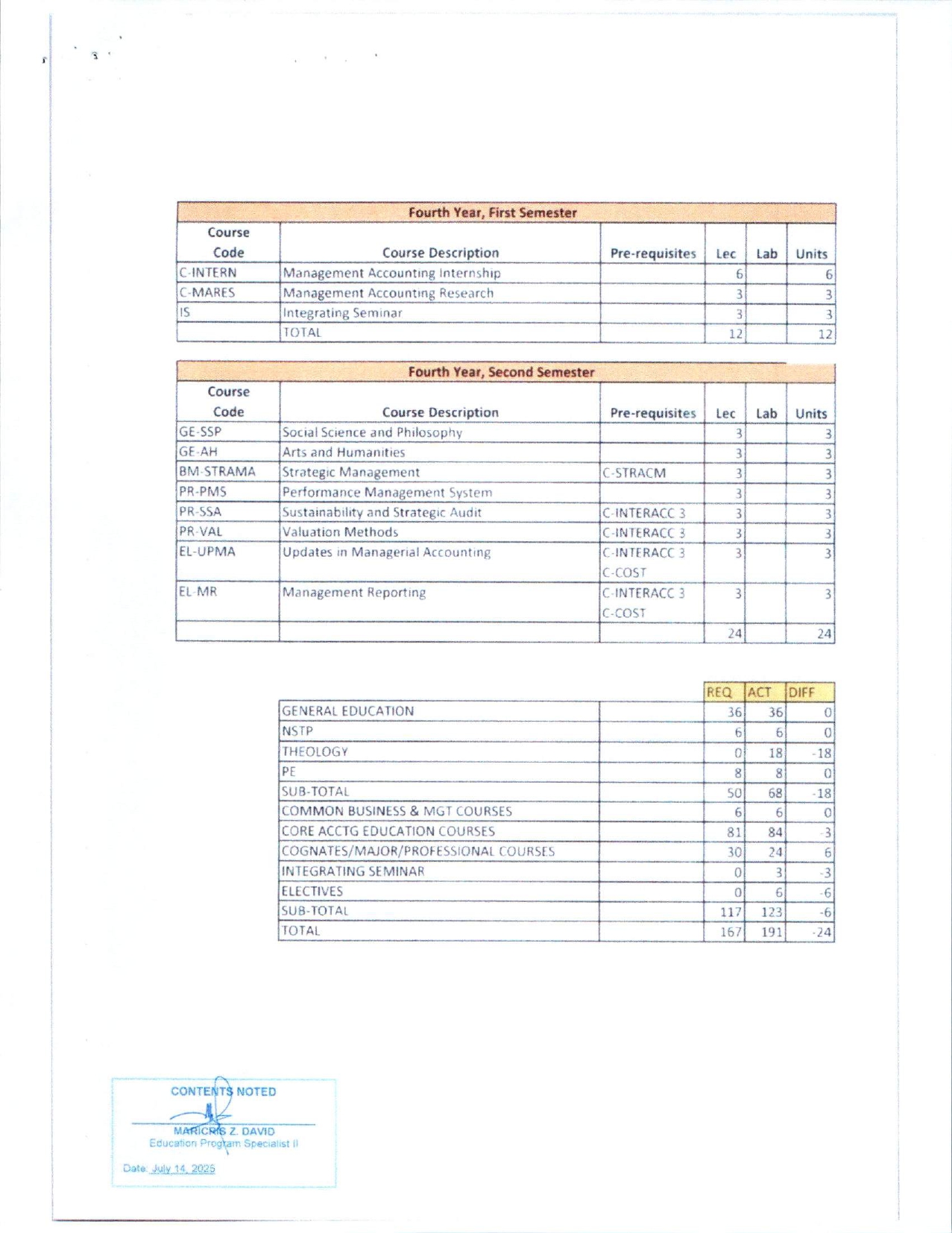
BSA-MBA CONTENTS NOTED
BSMA CONTENTS NOTED


